
The audit, which was requested by Lt. Gov. Dan Patrick and Texas House Speaker Dustin Burrows, comes in the wake of recent criticism from Senate lawmakers over the BDO’s grant award process and how it potentially favored low-earth-orbit satellite service.
________________________________________________
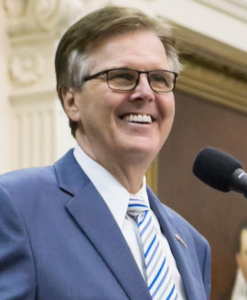
Lt. Gov. Dan Patrick
After weathering allegations of “sweetheart” deals and undue favoritism regarding its grant distributions, the state’s Broadband Development Office now finds itself bracing for a state audit with potential legislative repercussions.
The audit, which was requested by Lt. Gov. Dan Patrick and Texas House Speaker Dustin Burrows, comes in the wake of recent criticism from Senate lawmakers over the BDO’s grant award process and how it potentially favored low-earth-orbit satellite service. The main provider of that service is Starlink, which is owned by billionaire and mega political donor Elon Musk.
A BDO witness during a hearing last month of the Senate Business and Commerce committee revealed that an official from Gov. Greg Abbott’s office had intervened at the agency shortly before it announced grant awards favoring low earth satellite service. In a July 21 joint statement, Patrick and Burrows wrote that the Texas Legislature, depending on what the audit finds, could pursue statutory corrections during the next regular session in 2027.
“It is critical that the Office’s performance and operations meet the expectations of the Texas Legislature and the people of this state,” wrote Patrick and Burrows, who also serve as joint chairs of the Legislative Audit Committee.
Texas Comptroller spokesman Kevin Lyons expressed confidence that the audit will show a fair and transparent grant process. He likewise predicted that the audit would correct “significant misinformation” from the recent legislative hearing, according to a report of Lyons’ comments in the online Texas Tribune news site.
“The allegations appear to be driven by certain companies’ dissatisfaction with the outcome of an impartial process rather than by the facts,” Lyons told the Texas Tribune. “Claims of favoritism and unfair treatment are unsupported and fundamentally misrepresent the BDO’s work.”
Lyons said the audit process is already underway by the State Auditor’s Office.
Checkered History
In 2023 Texas received $3.3 billion in funding from the federal government — the most for any state — as part of the national Broadband Equity, Access and Deployment grant program created by the Biden Administration. As its goal, BEAD was meant to bring broadband to the nation’s rural and underserved areas. In this sense, BEAD parallels earlier historic efforts to universalize electricity and telephone service.
The very next year, however, U.S. Sen. Ted Cruz called upon federal administrators to pause BEAD actions in anticipation of expected rule changes from the then-incoming Trump Administration. The state comptroller then followed up shortly after that with an announcement that Texas could return as much as $1 billion in BEAD funding to the federal government. In a letter to Cruz, the comptroller cited state and private sector initiatives as reasons for Texas not needing the money.
As noted in the Texas Tribune, the BEAD program initially favored fiber optic cable service for its grant awards, as opposed to other options. But that changed last year when the Trump administration adopted a technology-neutral stance. That new focus made it easier for Musk’s StarLink company to receive federal broadband grant dollars.
Drew Garner, an officer with the Benton Institute for Broadband & Society, recently noted that Musk’s companies have been lobbying to change rules nationwide around the awarding of broadband grants.