

The PUC’s new rules implement Senate Bill 231 that — among other things — requires the emergency units to be mobile and capable of generating electric energy within three hours. SB 231 also added new guardrail requirements for consumers. The author of SB 231 is state Sen. Phil King of Arlington.
________________________________________________
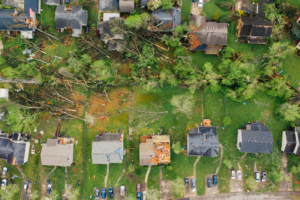
CenterPoint customers went without power for days after Hurricane Beryl.
New requirements for how Texas transmission and distribution utilities enter emergency generation leases received approval this month by the Texas Public Utility Commission.
Adopted by a commission order on Feb. 6, the changes to the Texas Administrative Code (16 Tex. Admin Code § 25.56) include protections for ratepayers recommended by the Steering Committee of Cities Served by Oncor, a municipal group known as “OCSC”, as well as other interested parties.
The leased units — known as Temporary Emergency Electric Energy Facilities, or “TEEEF” — have been a sore point for regulators and some lawmakers ever since hundreds of millions of dollars of such units went unused during Hurricane Beryl recovery efforts in 2021.
The PUC’s new rules implement reform legislation, Senate Bill 231, that — among other things — requires the emergency units to be mobile and capable of generating electric energy within three hours. SB 231 also added new guardrail requirements for consumers. The author of SB 231 is state Sen. Phil King of Arlington.
KEY RULES PROVISIONS
Key rules provisions include the following:
- A TDU cannot enter, renew, or extend any TEEEF lease unless the TEEEF has a maximum generation capacity of five megawatts or less; is mobile; is capable of being moved from its staged location in less than 12 hours; and can generate electric energy within three hours after being connected to a demand source. These provisions largely follow the language of SB 231.
- Rules establishing for when a TDU may enter, renew, or extend a lease involving a TEEEF with and without prior PUC authorization.
Rules establishing that if a TDU enters a TEEEF lease without prior PUC authorization, that it must provide during its next base rate case sufficient documentation to support its reasonableness, necessity, and prudence. - Rules specifying that the PUC may initiate a contested case proceeding to review a lease entered with an alteration provision to determine whether the public interest requires the alteration or termination of the lease. PUC staff, the utility, the Office of Public Utility Counsel, and other parties — including anyone granted intervenor status in the case — may participate in the proceedings.
STEERING COMMITTEE OF CITIES SERVED BY ONCOR (OCSC) RECOMMENDATIONS
- OCSC proposed that certain new guardrail protections should apply to more than just emergency TEEEF leases. The PUC agreed and included such provisions in the new rules.
- OCSC recommended that the PUC’s discretion to alter leases be extended beyond only those instances when TEEEF expenses are found imprudent in a ratemaking proceeding. The PUC adopted language supporting this recommendation.
- The PUC adopted language favored by OCSC that gives the agency discretion to determine when it is necessary to initiate a review of a TEEEF lease. Under the language, the commission can initiate an action to alter a lease at any time.
- In agreement with OCSC, the commission agreed to rules giving the agency the ability to initiate a proceeding to alter a lease if a TDU fails to meet various requirements. The new rules do not specify the circumstances that will trigger such a commission review.
- OCSC recommended that the commission’s actions to alter a lease include a process for stakeholder comments. In response to that and other OCSC recommendations, the new rules specify the commission’s review of a TEEEF lease will involve a contested case proceeding.
LEGISLATIVE HISTORY
Sen. King’s SB 231 from 2025 is not the first emergency mobile generation law adopted by the Texas Legislature. Rather, the first came in 2021, with the passage of HB 2483, also by King.
Houston’s CenterPoint Electric then leveraged that 2021 law to enter into lease agreements for 33 mobile generation units, at a cost, according to King, of nearly $1 billion. These leases were by far the most extensive and expensive by any utility statewide. However, these “emergency” units for the most part remained idle during their first true test: recovery efforts after devastating Hurricane Beryl also occurring in 2021.
Expressing outrage at what he described as CenterPoint’s misuse of his 2021 TEEEF legislation, King then pushed for reforms through his follow-up 2025 law.
The new SB 231 TEEEF rules take effect on March 1. You can find more information on the PUC website, under Docket No. 58392.